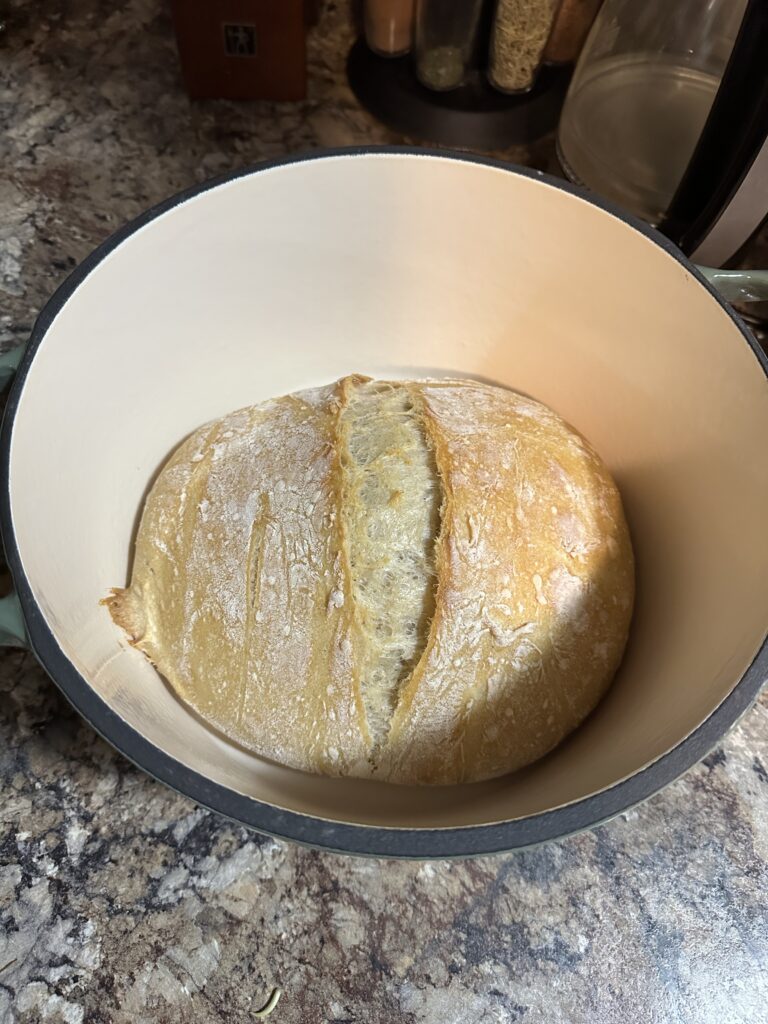
Making sourdough is just as much of an art as it is science. During my search to find a recipe, I discovered that there are many different methods. While all are very similar in their timeline and methodology, each baker adds their own unique touch. Whether it is folding, hydration content, or the type of flour used, every sourdough loaf is the result of both creativity and experimentation.
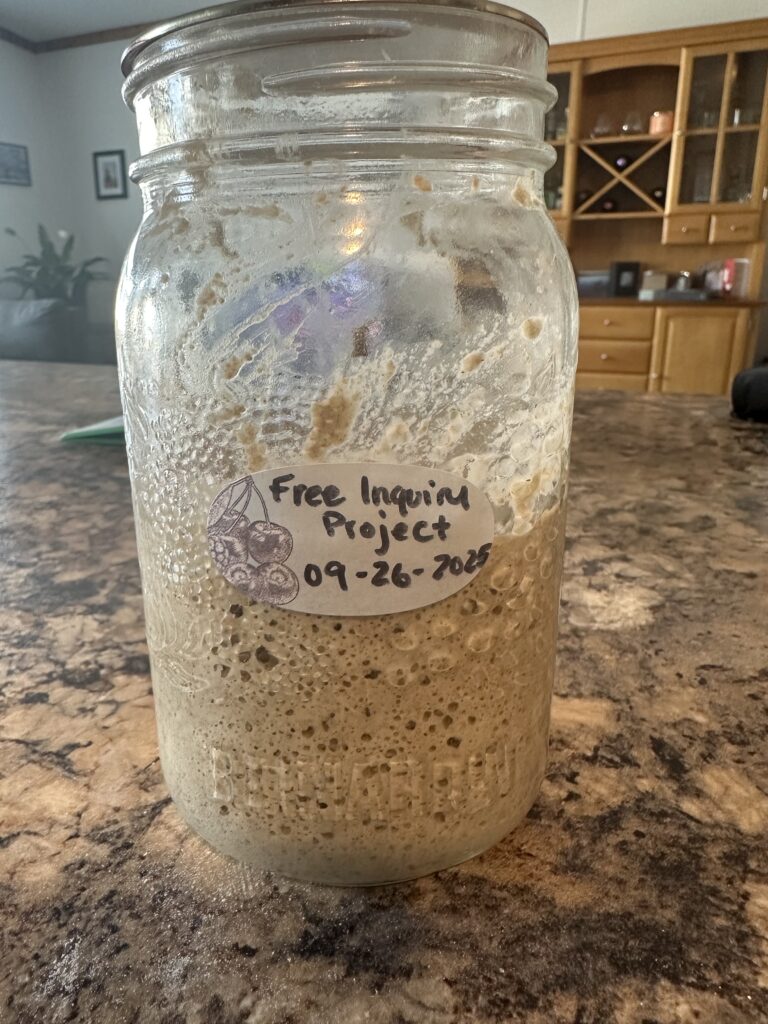
I was given a sourdough recipe by a colleague of mine who is also in the EKTEP program. I began by removing my starter from the fridge on Sunday morning to ‘wake up’ and feed. Placing sourdough in the fridge is useful for those who do not bake on a daily basis. When I first started feeding my starter, I had it out on the counter and was feeding/discarding every day. I began to notice just how much was being wasted (discard is a necessary evil of sourdough starter) and began looking for alternative storage options that better suited my busy schedule. Storing your starter in the fridge significantly slows the fermentation process, which allows you to reduce feeding to a weekly basis instead of daily. This has also been shown to give the bread a more complex flavour!
After removing the starter from the fridge to ‘wake up’ (warmer temperatures affect rate of fermentation), I fed it fresh flour and warm water. I found the most challenging aspect of bread-making to be time management. For example, after feeding your starter for making bread, you must wait 4-7 hours for it to double in size. Then you combine more flour, salt, and water and must let it rest for another 2-3 hours! The bubbles seen in your starter is where the magic happens- these are pockets of gases produced by the fermentation, giving sourdough its notable flavour.
Stretching and Folding
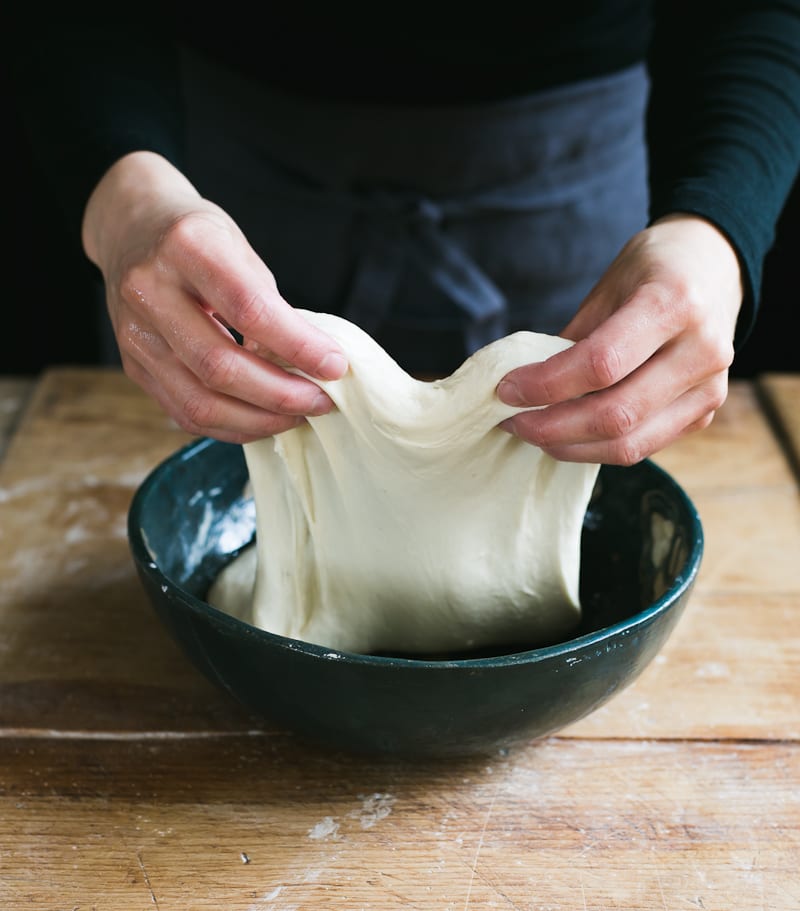
The recipe I used called to stretch and fold the dough every 30 minutes for the next two hours after the first rise. Stretching and folding the dough is done to strengthen the dough and give it an airy texture. If you read my previous blog post on the science of bread making, you’ll remember that this is similar to the act of kneading the dough, as it helps straighten out proteins in order for them to interact with each other better.
Cookware
In order to get a golden flaky crust, you need to bake your sourdough in a dutch oven. This is because the lid traps the steam, allowing the loaf to bake thoroughly and evenly. Dutch ovens are also preferred for bread making, as they can withstand high temperatures.
I was gifted a set of enamelled dutch oven pots that are sold at Costco. They are super easy to clean and a beautiful colour!

Learning through doing: My takeaways
Learning happens outside of your comfort zone
I am susceptible to paralysis through analysis, meaning I find it difficult to start a project if I do not feel completely confident in what I am doing. Starting my first loaf of sourdough was intimidating for this very reason! But, I knew that the only way I could determine my skill set and areas needed in growth was to start. This makes me think about instances of timid trepidation with elementary students in the classroom. When students do not have the confidence and the sense of security to feel safe to fail at something, they may avoid going outside of their comfort zone. That is why it is so important to show students it is okay to make mistakes (and that you do too).
Patience is a virtue
Making a loaf of sourdough involves a lot of waiting. I ended up doing a cold ferment for my final rise (a 8-10 hour rise in the fridge), bringing my total time from start to finish to be just under 24 hours. I opted for the cold ferment because otherwise I would be up well past midnight of the first day. This ended up working well in my favour, as cold ferments also influence the complexity of your bread’s flavour. A win-win: I get to sleep, and I have delicious bread to look forward to! I think projects like bread making can be useful for getting students used to delayed gratification. In fact, studies have shown that children who are more used to a delay in gratification (as opposed to immediate rewards) tended to be more successful in life. This is because they developed higher levels of persistence and self-control; traits that are essential for overcoming challenge and adversity.
Unconsciously Expanding your Knowledge
I think learning is the most fun when you don’t even know that you’re learning. An experiment conducted at Harvard University asked students to report in what contexts they feel like they learn the most: lecture-style methods or activity-based approaches. Most students reported that they felt they learned more in traditional lecture settings. Interestingly enough when tested, students in the activity-based approach did far better, suggesting that they learned and retained more information even if they did not realize it. The researchers theorized that students may feel like they learn more in a lecture as there is less effort on their end. Hands-on approaches require more cognitive effort, which may force students to leave comfortability.