The ingredients behind a fluffy loaf of bread are simple: flour, water, yeast, and sugar. But with a closer look, we see that there is more to these ingredients than initially meets the eye. If you have made bread before, you know that when these four ingredients are combined, the dough doubles in size. This reaction has always fascinated me, which made me wonder what was going on at a molecular level.
The Flour
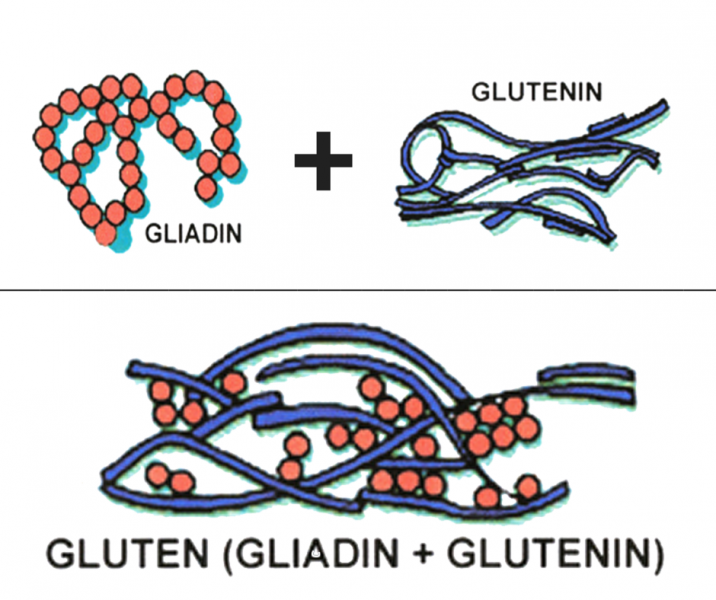
There are many different types of flour. What makes each of them unique is their protein content. Bread flours will have a higher protein percentage, ranging around 12-14%, whereas all-purpose flours tend to be in the 10-11% range. So what does this mean, exactly? The more protein there is, the higher the rise. It will also add to the texture of the final product, making it more chewy. These proteins, specifically glutenins and gliadins, are what create gluten.
Adding Water
When we add water to our flour, the gliadin and glutenin proteins line up with one another to create stronger bonds and a larger network of gluten. I found the below video helped me to understand this process visually. When we knead the dough, it helps straighten out these proteins in order for them to interact with each other better.
Yeast: What is it?
The word yeast comes from old-English, where the root ‘yes’ means “to boil” or “rise”. Yeast is a single-celled fungus that has been on Earth for hundreds of millions of years. Depending on the type (there are currently more than 1500 types of yeast identified today), yeast can create alcohol by converting carbohydrates and CO2 when left to ferment (sugar is partially responsible for this process). Yeast in bread dough converts the sugars into CO2, giving us air pockets in fluffy bread.
Before commercial yeast was introduced, bakers would obtain this culture from the town’s brewer, who would scrape off the ‘barm’ for the baker to use as a leavening agent in their breads. This barm was essentially a foamy yeast substance that would float to the top of their batch of beer during the fermentation process. There are also a wide variety of wild yeasts in the air we breathe, which is how sourdough starter works!
Into the Oven
Once you have allowed ample time for the yeast to ferment and the dough to rise, it is time to bake your loaf. In the oven, the carbon dioxide and sulphates are cooked off, leaving behind their footprints that give bread its classic airy texture. Through my research, I learned that bread will begin to go stale not due to a loss in moisture, but due to the crystallization of the starch in the bread. This indicates that if you plan to store your bread in the fridge, this will only exacerbate your problem! The best way to mitigate this process is to store homemade bread in a sealable ziplock bag at room temperature. In our house, we don’t have to worry about this too much, as we tend to eat all of it before this happens!