For this week’s class, we had the opportunity to visit the School District 5 Design Lab located at one of the local elementary schools. The instructor explained the idea behind Transformative Learning and Technology, which seeks to build creative and critical thinking through hands-on, inquiry-led processes using digital tools.
One device that was shown to us that I loved was called a Chompsaw, which is a kid-friendly and kid-safe power tool specifically designed to cut cardboard (not fingers!). Watching the instructor demonstrate its capabilities and safeguards made me think of so many different ways this could be used in the classroom. Regardless, I think it is a great way to foster creativity. I would have loved one of these as a kid! Their website features so many different lesson and activity ideas, ranging from building and designing a hat, making 3-dimensional shapes, to making a racetrack for toy cars and making a crane.
The Design Lab had other resources like Cricuts, digital Rubik’s cubes, robotic hand sensors, green screen for video creation and editing, and an assortment of legos. I was unsure about the digital Rubik’s cube, initially thinking that the online feature would defeat the purpose of the puzzle. After some digging, I see that it won’t necessarily just give you the answer. Rather, the online features can provide lessons and tutorials for figuring out how to solve the cube on your own. Very cool!
It is amazing how many different things you can do with a Cricut device. I instantly saw the potential behind making one-of-a-kind classroom decor that saves time and looks professional. We created buttons by designing the logo on the Cricut app, cutting it out on card stock, and using the design lab’s button pressor.
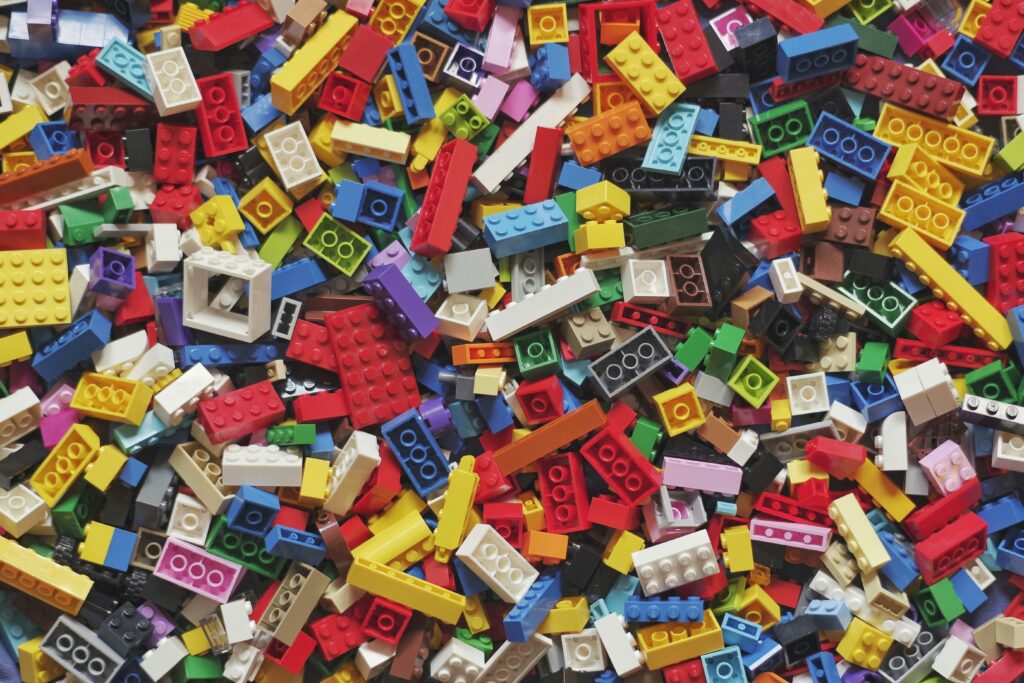
There were many different Lego kits, including one where students are tasked with creating a gondola that transports their lego figurines from one side of a lake to the other. I think Legos are an engaging and fun way to make ADST and hands-on. The Lego kits encourage teamwork, creative thinking, and persistence through the process of inquiry, ideation, prototyping, testing, and refining.
Visiting the SD5 Design Lab was an enriching and exciting experience. I am looking forward to taking my future classroom there, as I can see how engaging and fun this resource can be. Not only this, I see it as a way to foster creativity and inspire students to think outside of the box. One of the common ideologies that has been reverberated within EKTEP is the need for experiential learning, or “learning by doing”. I think the Design Lab embodies this mindset, allowing students to become designers, testers, creators, and problem-solvers.